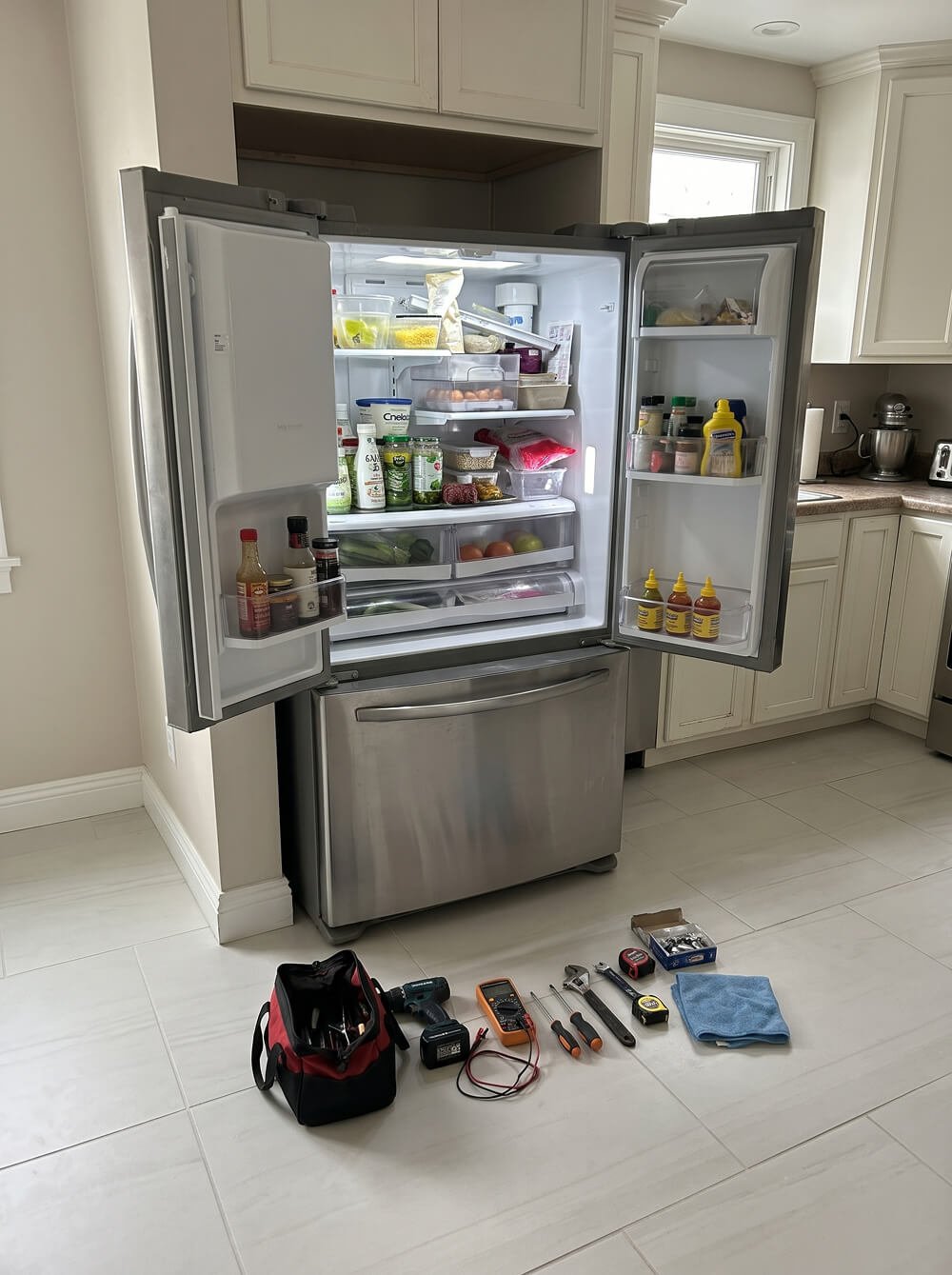
Is your refrigerator running, but the food inside feels warmer than it should? A fridge that is not cooling can put groceries at risk and may point to an airflow problem, a dirty condenser, a failed fan, or another component issue. This guide explains what you can safely check first, which symptoms may help identify the cause, and when to schedule refrigerator repair in San Diego.
What to Check First When Your Refrigerator Stops Cooling
Before assuming a major component has failed, check a few basic things. These steps do not require removing panels or working with electrical parts:
- Verify the temperature setting. Make sure the controls were not accidentally changed. Use an appliance thermometer instead of relying only on the display or how cold food feels.
- Check the doors and gaskets. Confirm that both doors close fully and that food packages are not preventing a tight seal.
- Keep interior vents clear. Avoid packing containers directly against the air outlets, because blocked airflow can leave parts of the refrigerator warm.
- Listen for normal operation. Notice whether the unit is running, repeatedly clicking, or unusually quiet. These clues can help a technician, but they do not confirm a specific failed part.
- Check the owner's manual. If the model allows accessible condenser-coil cleaning, follow the manufacturer's instructions and disconnect power before cleaning where instructed.
Food-safety note: Keep your refrigerator at 40°F (4.4°C) or below. USDA guidance says perishable food held above 40°F for more than two hours should not be consumed. Keep the doors closed as much as possible while you address the cooling problem. Read the USDA refrigeration guidance.
Common Reasons Your Refrigerator Is Not Cooling
1. Evaporator Fan Motor Problem
The evaporator fan moves cold air through the refrigerator and freezer compartments. If the fan stops working, air may not circulate properly. One possible pattern is a freezer that remains cold while the fresh-food compartment gets warm, although a blocked vent, damper issue, or other fault can cause similar symptoms.
2. Defrost System Failure
Many refrigerators periodically melt frost from the evaporator coils. If a defrost heater, sensor, thermostat, or control fails, frost can accumulate and restrict airflow. Heavy frost or a snowy layer on the inside back wall of the freezer may be a clue, but inspection is needed to identify the failed component.
3. Dirty Condenser Coils or a Condenser Fan Issue
Condenser coils release heat from the refrigeration system. Dust and pet hair can interfere with heat transfer, while a faulty condenser fan may prevent adequate airflow across the coils. Cleaning may help when dirt is the cause, but it will not resolve a failed fan or another mechanical problem. Follow the model's service instructions before attempting any cleaning.
4. Compressor Start Relay or Electrical Fault
A start device or electrical problem can prevent the compressor from starting correctly. Repeated clicking may occur, but the same symptom can have several causes. Avoid opening electrical compartments or replacing parts based on sound alone.
5. Compressor, Temperature Control, or Sealed-System Problem
If both the refrigerator and freezer are warm, the cause may involve the compressor, control system, condenser airflow, or the sealed refrigeration system. These faults require proper testing by a qualified appliance technician. Low cooling performance alone does not prove that refrigerant is low or that the compressor has failed.
Refrigerator Troubleshooting: Symptoms and Possible Causes
The table below is a starting point, not a diagnosis. Several faults can produce similar symptoms, so a technician may need to test the appliance before recommending a repair.
| What you notice | Possible causes | Recommended next step |
|---|---|---|
| Freezer cold, refrigerator warm | Airflow restriction, evaporator fan, or air damper issue | Check that interior vents are clear; arrange service if cooling does not return. |
| Both compartments are warm | Condenser airflow, compressor start issue, controls, or sealed-system fault | Check the settings and door closure; schedule professional diagnosis if the problem persists. |
| Heavy frost on the freezer's inside back wall | Possible defrost-system or airflow problem | Do not chip away ice with sharp tools; request an inspection. |
| Repeated clicking and poor cooling | Possible start-device, compressor, or electrical issue | Avoid repeated attempts to restart the appliance and arrange service. |
| Water pooling inside the refrigerator | Possible blocked defrost drain, drainage issue, or excess condensation | Wipe up water and check the manual; ask for service if it returns or cooling is affected. |
What You Can Safely Check Yourself
- Measure the actual temperature. Place an appliance thermometer inside and check whether the refrigerator can maintain 40°F (4.4°C) or below.
- Give the unit room to breathe. Make sure the refrigerator has the clearances specified by its manufacturer and that accessible vents are not blocked.
- Inspect the door seal. Wipe away residue and check for obvious gaps, tears, or packages that stop the door from closing.
- Clean accessible coils only as directed. Some models have coils that are easy to reach; others require moving the unit or removing panels. Follow the manual and disconnect power as instructed. Do not pull a heavy refrigerator alone.
- Keep the doors closed. Opening them repeatedly allows cold air to escape while you troubleshoot or arrange service.
Do not dismantle electrical panels, handle compressor wiring, puncture ice buildup, or work on sealed refrigerant lines. These tasks require appropriate tools, training, and model-specific procedures.
When to Call a Refrigerator Repair Technician in San Diego
Professional diagnosis is the sensible next step when basic checks do not restore cooling, the temperature keeps climbing, the compressor repeatedly clicks, frost returns quickly, or you suspect a fan, control, compressor, or sealed-system fault. Continued operation with inadequate cooling can put food at risk and may place additional strain on components.
During a service visit, a technician can verify temperatures, inspect airflow and accessible heat-exchange components, check fans and controls, and test the relevant electrical components according to the refrigerator's design. The exact tests depend on the symptoms and model; a refrigerant-pressure check is not automatically needed for every cooling complaint. To learn about available repair options, visit our refrigerator repair service in San Diego.
Frequently Asked Questions
Why is my refrigerator not cooling but the freezer is working?
This can happen when cold air is not moving properly from the evaporator area into the refrigerator compartment. A fan, blocked passage, or air damper problem is one possibility. Heavy frost or a control fault can create similar symptoms, so inspection is needed to confirm the cause.
Should I unplug a refrigerator that is not cooling?
Do not repeatedly unplug and restart it as a substitute for diagnosis, especially if you hear repeated clicking or notice electrical or burning smells. Follow the owner's manual, keep food safe, and contact a technician when the cause is not obvious. If there is smoke or a burning smell, disconnect power only if it is safe to do so.
Can dirty condenser coils make a refrigerator warm?
Yes. Dirt can interfere with heat release on models with accessible condenser coils. However, cleaning is not a cure for a failed condenser fan, compressor, control, or sealed-system issue. Use the manufacturer's instructions for your specific model.
How long does refrigerator repair take?
Repair time depends on the cause, appliance model, parts availability, and the testing required. Some straightforward repairs can be completed during one visit; more complex faults or parts that must be ordered can take longer. A reliable time estimate should follow diagnosis.
When should I discard food from a warm refrigerator?
Keep the refrigerator at 40°F (4.4°C) or below. According to USDA guidance, perishable food that has been above 40°F for more than two hours should not be consumed. Do not taste food to judge its safety; consult official food-safety guidance for specific items.
Need Refrigerator Repair in San Diego?
If your refrigerator is still warm after basic checks, contact Avalanche Appliance Repair to discuss the symptoms and arrange a diagnostic visit. Service availability, pricing, and repair time should be confirmed when booking.
Call (858) 899-3385 to Arrange Repair View our refrigerator repair service and booking options